
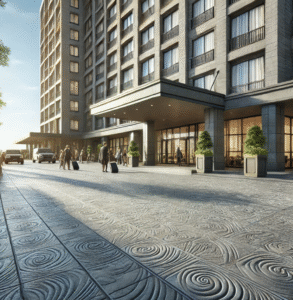
When it comes to first impressions in the hospitality industry, appearances matter. Guests form opinions about a hotel long before they reach the front desk. Curb appeal, outdoor walkways, pool decks, patios, and even driveways play a vital role in shaping those opinions. That’s where stamped concrete comes in—a beautiful, durable, and cost-effective design choice that can completely elevate the aesthetics and functionality of a hotel property. 🏨✨
In this article, we’ll explore why stamped concrete is more than just a decorative trend. It’s a strategic investment for hotel owners looking to enhance brand image, guest satisfaction, and long-term cost efficiency. From aesthetic flexibility to safety, low maintenance, and eco-friendliness, stamped concrete offers a powerful combination of benefits that align perfectly with the operational goals of modern hotels.
What Is Stamped Concrete?
Stamped concrete is a specialized form of concrete that’s textured, patterned, or embossed to resemble other materials—like brick, slate, flagstone, tile, or wood. It’s poured and then stamped before it fully cures to give it a high-end, finished look that mimics natural materials—without the associated cost or maintenance. 👷♂️🔨
According to the American Society of Concrete Contractors (ASCC), stamped concrete is growing in popularity for commercial projects due to its versatility and affordability.
Benefits of Stamped Concrete for Hotels
1. Elevates Aesthetic Appeal Instantly 🌟
First impressions are everything. Whether it’s a boutique hotel, a luxury resort, or a mid-tier chain, the exterior and communal spaces need to reflect a hotel’s branding and create a sense of welcome.
Stamped concrete enhances visual appeal by offering endless customization options. Hotels can choose from a wide array of textures, colors, and patterns to match their architectural style—Mediterranean, contemporary, rustic, or classic.
Areas where stamped concrete can visually transform a hotel include:
-
Entrance driveways
-
Valet areas
-
Walkways and courtyards
-
Pool decks and patios
-
Outdoor dining and bar zones
A well-designed stamped concrete entrance can make the arrival experience feel luxurious before guests even walk through the front doors.
2. Cost-Effective Alternative to Natural Materials 💰
Hotels often look for materials that reflect luxury while managing costs. Stamped concrete offers the appearance of expensive materials like natural stone, slate, or hardwood—but at a fraction of the cost.
Installation is faster and less labor-intensive compared to laying individual pavers or sourcing rare stone, making it a budget-conscious choice that doesn’t compromise on style.
According to the Concrete Network, stamped concrete typically costs $8 to $18 per square foot, depending on the level of customization, which is significantly less than natural stone.
3. Long-Term Durability for High Traffic Areas 🚶♀️🚶♂️
Hotels deal with constant foot traffic, luggage wheels, valet carts, maintenance equipment, and more. Durability is non-negotiable.
Stamped concrete, when properly installed and sealed, is strong enough to withstand daily wear and tear, heavy loads, and exposure to the elements. It resists cracking, chipping, and fading over time. Unlike pavers or tiles, there’s no risk of shifting or becoming uneven, which keeps surfaces safe and looking sharp.
4. Low Maintenance = More Savings 🧹🧽
Hotels already have enough to manage without adding complex flooring maintenance to the mix. Stamped concrete simplifies upkeep:
-
Occasional sweeping and washing keep it clean
-
A reseal every 2–3 years maintains color and integrity
-
No weeds or gaps like with pavers
-
Fewer repairs compared to natural materials
This low-maintenance nature means reduced operational costs over time. Hotel teams can focus on hospitality instead of hardscaping headaches.
5. Weather Resistance for All Climates 🌧️☀️❄️
Hotels across diverse climates—from snowy ski resorts to sunny beachside escapes—need materials that can endure weather extremes.
Stamped concrete is highly resistant to freeze-thaw cycles, UV exposure, and moisture when sealed properly. It’s non-porous, reducing the risk of water damage, mold, or mildew—an essential factor in humid or rainy regions.
Many hotels in coastal or mountainous areas use stamped concrete to reduce long-term erosion and cracking caused by temperature fluctuations and sea air.
6. Customization that Strengthens Brand Identity 🖌️
Your hotel’s style is a critical part of your brand story. Stamped concrete helps reinforce that narrative with a custom look and feel. You can:
-
Integrate logos or patterns into the design
-
Match the color palette of the building’s exterior
-
Choose thematic designs for different areas (e.g., tropical prints near the pool, sleek geometric patterns for conference zones)
This level of intentional design helps create a cohesive and memorable guest experience—from the parking lot to the penthouse.
7. Slip Resistance and Safety Prioritized 🚧
Safety is always a top concern—especially around pool areas, courtyards, or walkways. Stamped concrete can be textured and sealed with anti-slip coatings, helping reduce the risk of slips and falls, even in wet conditions.
Per the National Safety Council, slip-and-fall accidents are one of the leading causes of injury in public places. Using stamped concrete with proper safety finishes is a smart way for hotel owners to protect guests and reduce liability.
8. Sustainable & Environmentally Friendly ♻️
Sustainability is more than a trend—it’s a guest expectation. Hotels are increasingly seeking ways to reduce their environmental impact without sacrificing aesthetics or performance.
Stamped concrete contributes to sustainability by:
-
Using locally sourced materials
-
Lasting for decades (reducing waste)
-
Reflecting light in lighter shades (reducing heat island effect)
-
Reducing the need for additional surface materials like sealants or adhesives
The Portland Cement Association explains how concrete, when used strategically, can support green building goals.
9. Boosts Property Value & ROI 📈
Stamped concrete doesn’t just make your hotel look better—it can increase your property value and guest satisfaction, both of which contribute to long-term ROI.
Upgraded exterior design features like stamped concrete:
-
Increase booking appeal on travel sites and platforms
-
Contribute to higher ratings and reviews
-
Justify premium pricing
-
Enhance the resale or refinancing value of the property
This means that a one-time investment in stamped concrete can generate financial benefits for years to come.
10. Perfect for Indoor-Outdoor Flow 🌿
Modern hotels often blur the lines between indoor and outdoor spaces. Think open-air lounges, garden dining, fire pit patios, and transitional entryways. Stamped concrete helps maintain a seamless look and feel across all areas of the property.
With a variety of patterns like ashlar, cobblestone, flagstone, and wood grain, stamped concrete can be tailored to suit any architectural style while maintaining a cohesive design theme from interior floors to exterior paths.
Where Should Hotels Use Stamped Concrete?
Stamped concrete can elevate nearly every area of a hotel property. Here are some ideal applications:
| Location | Benefits |
|---|---|
| Main Entrance | Curb appeal, welcoming vibe |
| Valet Area | Durable under vehicular traffic |
| Walkways | Safe, slip-resistant, and stylish |
| Pool Decks | Cooler finishes available, safe for wet feet |
| Courtyards | Elegant and inviting |
| Outdoor Dining | Clean, classy surface that elevates ambiance |
| Conference Center Entryways | Professional and polished impression |
| Wedding/Event Spaces | Ideal for upscale, photogenic backdrops |
Real-Life Examples of Stamped Concrete in Hospitality 🏖️
Many world-class resorts and hotels have implemented stamped concrete to enhance aesthetics and guest experience:
-
Disney Resorts use themed stamped concrete patterns throughout their parks and hotels to create immersive experiences.
-
Marriott Hotels often use stamped concrete in their driveways and patios for a consistent, upscale look across locations.
-
Luxury beach resorts frequently use stamped concrete for pool decks that mimic stone or wood, with heat-resistant finishes.
Conclusion: Why Stamped Concrete Is a Smart Move for Hotels
When it comes to hospitality design, every surface tells a story. Stamped concrete gives hotel owners a powerful tool to tell a story of elegance, quality, safety, and modern appeal—without blowing the budget. It’s a material that speaks to both beauty and brains.
Whether you’re looking to improve curb appeal, reduce maintenance, increase safety, or create brand-cohesive spaces, stamped concrete is an option worth considering. It offers the kind of wow factor that keeps guests coming back—and leaving glowing reviews. 🌟
Final Thought
Investing in stamped concrete is more than a visual upgrade. It’s a strategic decision that enhances your hotel’s brand image, functionality, and guest satisfaction. In an industry where details make the difference, stamped concrete helps you lay the groundwork—literally—for excellence.
Ready to transform your hotel’s outdoor (or indoor) spaces with a surface that stuns and performs? Don’t settle for plain—stamp your success. 💪🧱