
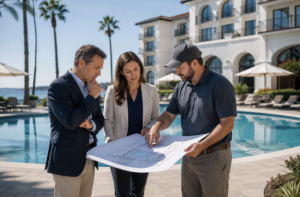
California Peninsula hotels have always competed through location, service, comfort, and atmosphere. Today, however, guests often judge a property before they ever walk through the lobby. They study photographs, compare outdoor amenities, read recent reviews, and look for experiences that feel distinctive enough to justify the trip.
That shift has placed hotel pools under a brighter spotlight. A pool is no longer viewed as a simple rectangle of water tucked behind the building. It can become the visual centerpiece of a property, a gathering place for guests, an event setting, a wellness amenity, and one of the most photographed areas of the hotel.
This is why hotel owners throughout the Peninsula are changing how they evaluate pool contractors. Price and availability still matter, but they are no longer enough. Owners need professionals who understand hospitality environments, guest expectations, long-term maintenance, California conditions, accessibility, design continuity, and the financial importance of keeping hotel amenities operational.
California’s Hotel Market Is Becoming More Experience-Driven 🌴
California remains one of the country’s most recognizable travel destinations. Its coastline, cities, technology centers, wine regions, entertainment industry, and varied natural scenery attract business travelers and vacationers from around the world. The state’s enormous geographic and cultural range is documented in resources such as Wikipedia’s overview of California, which provides useful background on the population, geography, economy, and attractions that shape travel throughout the state.
For hotels on the California Peninsula, this means competition extends far beyond the neighboring property. A guest may compare a Peninsula hotel with a San Francisco property, a coastal resort, a Silicon Valley boutique hotel, or a private vacation rental.
A plain pool deck with outdated furniture and minimal landscaping may technically satisfy a property’s amenity list, but it rarely creates a compelling impression. Guests increasingly gravitate toward spaces that feel intentional. They notice comfortable gathering areas, attractive lighting, greenery, privacy, shade, easy access, clean finishes, and the relationship between the pool and the surrounding architecture.
Hotel owners are therefore looking beyond basic pool construction. They are considering how the entire outdoor area contributes to the identity of the property.
Tourism Data Is Influencing Property Investment Decisions
Hotel renovation decisions are rarely based on appearance alone. Owners must consider occupancy, competition, operating expenses, guest satisfaction, property value, and the ability to generate additional revenue.
The Visit California research dashboard gives hospitality leaders access to market information involving travel spending, hotel performance, air travel, visitor behavior, and international tourism. This type of data helps owners understand that hotel improvements take place within a much larger tourism economy.
Recent figures shared by the California Hotel & Lodging Association reported that California generated approximately $158.9 billion in visitor spending, $13.6 billion in tax revenue, and support for roughly 1.2 million jobs. The organization also noted that California outperformed the broader country in important areas of hotel demand.
Those numbers help explain why hotel owners are treating outdoor amenities as business assets rather than decorative extras. A memorable pool environment can influence booking photographs, wedding inquiries, group events, guest reviews, social media exposure, and the perceived value of a room.
The Lowest Construction Bid May Carry the Highest Long-Term Cost
Hotel owners once searching primarily for the lowest bid are paying closer attention to lifetime value. An inexpensive proposal can become costly when materials deteriorate early, drainage is poorly planned, equipment is difficult to service, or repairs require repeated closures.
Hotel pool construction also differs from a typical residential project. A hotel may serve hundreds of guests during a busy week. Pool areas experience heavier foot traffic, more frequent cleaning, longer operating hours, and greater pressure on equipment and surrounding surfaces.
Every closure can affect the guest experience. Even a temporary shutdown may produce complaints when travelers specifically selected the hotel because it advertised a pool. During peak travel periods, a closed amenity can influence reviews and create additional work for managers and front-desk employees.
The contractor-selection process must therefore account for durability, serviceability, scheduling, communication, and disruption. A hotel owner needs to know how the work will affect guests, employees, deliveries, events, and normal property operations.
Hotel Owners Want Pool Contractors Who Understand the Entire Setting
A successful hotel pool project must work with the property rather than appear added as an afterthought. Architecture, landscaping, walkways, exterior colors, lighting, dining areas, guest-room views, and event spaces all contribute to the final result.
A sleek pool may suit a modern Silicon Valley hotel, while a softer design with natural textures may feel more appropriate for a coastal or garden-oriented property. The right direction depends on the hotel’s market, surroundings, brand identity, and typical guest.
Owners researching Pool Contractors Near Me Peninsula Area are increasingly evaluating whether a contractor can see the pool as part of a larger outdoor environment. That perspective matters because guests experience the complete setting rather than individual construction components.
A beautiful pool surrounded by uncomfortable seating, exposed equipment, harsh lighting, or disconnected landscaping will never reach its full potential. The strongest spaces feel unified from the moment a guest approaches them.
Social Media Has Changed the Value of Hotel Pool Design 📸
Hotel marketing once depended heavily on brochures, travel agents, roadside visibility, and printed tourism guides. Today, a single outdoor photograph can reach thousands of prospective guests through travel platforms, social media posts, wedding websites, and online reviews.
Pool areas naturally produce visual content. Guests photograph morning coffee beside the water, children enjoying a family trip, couples relaxing after an event, and groups gathering during warm evenings. Those images can become unpaid exposure for the property.
This does not mean every hotel needs an oversized resort pool or elaborate attraction. A smaller pool can still create a powerful impression when the proportions, surroundings, materials, lighting, and furniture work together.
Hotel owners are asking more thoughtful questions during the planning process. They want to know where guests will sit, which angles will appear in photographs, how the space will look after sunset, and whether the environment feels private enough to encourage people to stay.
The pool contractor’s role has expanded because the finished project contributes directly to the hotel’s public image.
Competition Is Raising Expectations Across California
The California lodging market continues to evolve as new properties enter the market and existing hotels complete renovations. The California Hotel & Lodging Association news center regularly covers hotel development, tourism performance, legislation, workplace issues, and operational trends affecting properties across the state.
A CHLA report found that California hotel openings increased significantly during the first half of 2025, including a major increase in newly available rooms. The same report also described pressures involving construction costs, labor availability, tariffs, and extended development timelines.
New hotel rooms create additional choices for travelers. Older properties do not always need complete redevelopment to remain competitive, but they do need to identify the spaces that most strongly influence guest perception.
For many Peninsula hotels, the pool area presents a valuable renovation opportunity. Improvements can refresh the appearance of the property, create new promotional photographs, strengthen event marketing, and make an established hotel feel relevant again.
Regional Economic Impact Is Part of the Conversation
Hotels support far more than overnight accommodations. Guests spend money at restaurants, stores, museums, transportation services, entertainment venues, and local attractions.
An American Hotel & Lodging Association report on San Francisco’s tourism economy stated that hotels generated more than $12 billion in economic impact during 2025. The report connected that activity with nearly 50,000 jobs and approximately $2 billion in taxes.
For Peninsula hotel owners, those figures reinforce the broader value of maintaining properties that visitors want to book, recommend, and revisit. A hotel’s condition can influence more than its own revenue. It contributes to the reputation and economic health of the surrounding destination.
Pool renovations may represent only one part of a hotel improvement strategy, but highly visible amenities often influence how travelers describe the entire stay.
Transparency and Communication Matter More Than Ever
Hotel projects involve numerous stakeholders. Ownership groups, managers, maintenance employees, designers, insurance representatives, vendors, and local officials may all need information at different stages.
The contractor must communicate clearly about scheduling, responsibilities, site access, materials, interruptions, inspections, and changes. Vague proposals or inconsistent updates can create confusion long before construction problems become visible.
Transparency is also becoming a broader issue throughout the hospitality industry. California has adopted pricing requirements affecting how hotels disclose certain mandatory charges. The California Hotel & Lodging Association’s fee-transparency guidance demonstrates the detailed regulatory environment in which hotel operators now work.
Although room-pricing rules and pool construction are separate matters, they reflect the same operational reality: hotel owners need reliable information, accurate documentation, and professional partners who communicate clearly.
Maintenance Planning Begins Before Construction Ends
A pool that looks impressive on opening day can quickly lose its appeal when maintenance is difficult. Hotel owners are placing greater emphasis on what happens after construction.
Equipment access, material durability, water management, cleaning routines, drainage, replacement availability, and staff responsibilities should be considered early. The hotel team needs a space it can reasonably maintain while serving guests every day.
The surrounding landscape matters as well. Plant placement can influence debris, shade, privacy, appearance, and maintenance demands. Deck materials must feel appropriate underfoot while standing up to frequent use. Lighting should support visibility and atmosphere without creating unnecessary glare for nearby guest rooms.
Thoughtful planning reduces the likelihood that the hotel will face preventable operational headaches after the contractor has left.
Hotels Are Looking for More Than a Swimming Pool
The best hotel pool environments support several kinds of guest experiences. A business traveler may use the space to unwind after meetings. A family may consider the pool the highlight of the trip. A couple attending a wedding may gather there the following morning. An event planner may view the setting as an extension of the hotel’s hospitality space.
This versatility makes the pool area more valuable. It can function as a retreat, a visual landmark, a social gathering space, or a backdrop for private events.
Owners are also considering how the area performs throughout the day. Morning comfort, afternoon shade, evening lighting, and seasonal conditions all influence whether guests actually use the space.
A pool that only looks good from one camera angle has limited value. A successful hotel pool area should remain comfortable, functional, and attractive during real daily use.
Reputation Is Built Through Details ⭐
Guests rarely evaluate construction quality using technical language. They respond to what they see and feel.
They notice whether surfaces appear clean, whether the furniture arrangement feels inviting, whether the lighting creates a pleasant evening atmosphere, and whether the entire area appears cared for. Small shortcomings can influence the overall impression of the hotel, even when the guest cannot identify the precise cause.
This is one reason hotel owners are becoming more selective. They understand that a contractor’s decisions may eventually appear in guest photographs and reviews.
The California Lodging News publication archive provides ongoing insight into the issues, ideas, and developments influencing the state’s lodging community. Following respected hospitality sources can help owners compare their own property decisions with wider industry expectations.
A pool project should not be isolated from those expectations. It should support the quality, atmosphere, and dependability guests associate with the hotel’s brand.
Conclusion
California Peninsula hotel owners are rethinking how they choose pool contractors because the pool itself has taken on a larger role. It influences marketing, guest satisfaction, property appearance, operational planning, event potential, and online reputation.
The most suitable contractor is no longer simply the company offering the quickest installation or lowest number. Hotel owners need professionals who understand the demands of hospitality properties and recognize how the pool connects with landscaping, architecture, guest movement, maintenance, and the broader outdoor experience.
California’s competitive tourism market will continue to reward hotels that give travelers a reason to remember their stay. A thoughtfully planned pool environment can help an established property feel renewed, give a new hotel a recognizable identity, and turn an ordinary amenity into one of the property’s strongest attractions.
For hotel owners across the Peninsula, choosing the right pool contractor has become a decision about much more than construction. It is a decision about the experience guests will see, share, and remember.